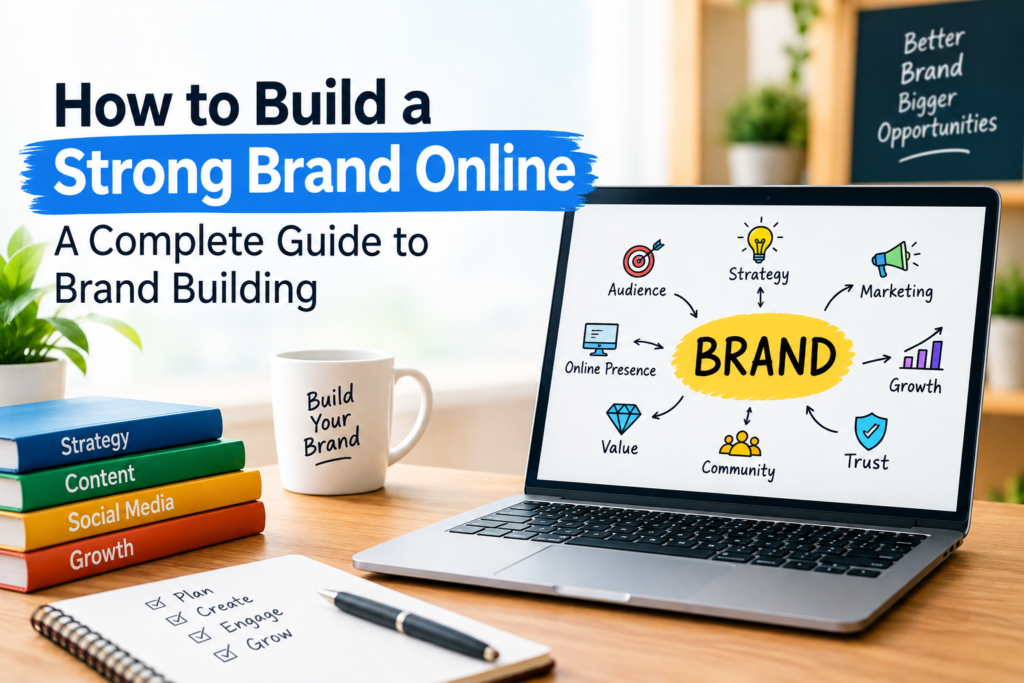
How to Build a Strong Brand Online: A Complete Guide to Brand Building
Building a strong online presence is essential for businesses that want to connect with their audience, establish credibility, and remain competitive in the digital marketplace. Brand building is not simply about creating an attractive logo or choosing a memorable name. It involves developing a clear identity, communicating a consistent message, understanding your audience, and creating meaningful experiences across digital platforms. Whether you are starting a small business, launching a personal brand, or growing an established company, a well-planned brand strategy can help you create a recognizable and trustworthy online presence. This guide provides simple and practical strategies for creating and developing a successful online brand. What Is Brand Building? Is the process of creating and developing a recognizable identity for a business, product, service, or individual. It includes everything from your visual identity and communication style to your values, customer experience, and online presence. A strong brand clearly shows customers what your business represents and why it is different from others in the market. It also creates consistency across your website, social media profiles, advertisements, emails, and other communication channels. Effective brand building focuses on creating a clear connection between a business and its target audience. Instead of focusing only on selling products or services, businesses should communicate their purpose and demonstrate the value they provide. Why Is Brand Building Important? In a competitive online environment, customers have many choices. A strong brand can make it easier for people to recognize a business and understand what it offers. Some important benefits of brand building include: Improving brand recognition Establishing credibility Creating customer trust Differentiating your business from competitors Supporting customer loyalty Strengthening your online presence Making marketing communication more consistent Effective brand building can also make your marketing efforts more memorable. When customers repeatedly see consistent messaging and visual elements, they can become more familiar with your business. 1. Define Your Brand Purpose The first step in brand building is understanding why your brand exists. Your brand purpose explains the main reason your business operates beyond simply generating sales. Ask yourself: What problem does my business solve? Who do I want to help? What value do I provide? What makes my business different? What values should my brand represent? A clear purpose can guide your marketing decisions and help you create a consistent identity. For example, a sustainable clothing business may focus its brand around responsible production, quality materials, and conscious consumer choices. These ideas can then influence its website content, social media communication, packaging, and customer experience. 2. Understand Your Target Audience Successful brand building requires a clear understanding of the people you want to reach. You should know their needs, interests, challenges, preferences, and expectations. Conduct audience research through surveys, customer feedback, website analytics, social media insights, and market research. Understanding your audience allows you to create messages that are relevant and useful. Instead of trying to appeal to everyone, identify a specific audience and develop your communication around their needs. When customers feel that a brand understands their problems, they may be more likely to engage with its content and consider its products or services. 3. Create a Strong Brand Identity Your brand identity is the collection of visual and communication elements that represent your business. It can include: Logo Brand colors Typography Photography style Graphics Tone of voice Brand messaging A consistent identity is an important part of brand building because it helps people recognize your business across different platforms. For example, your website, Instagram profile, advertisements, email newsletters, and promotional materials should have a consistent visual style. Consistency makes your brand easier to recognize and can create a more professional impression. 4. Develop a Clear Brand Message Your brand message should communicate what your business does, who it serves, and what value it provides. Avoid complicated language that makes your message difficult to understand. Instead, use simple and direct communication. A strong brand message should answer questions such as: Who are you? What do you offer? Who do you help? Why should customers choose you? Clear messaging makes brand building more effective because your audience can quickly understand what your business represents. 5. Build a Professional Website Your website is often the first point of contact where potential customers discover and engage with your brand. Therefore, it should provide a professional, useful, and easy-to-navigate experience. Your website should include: Clear brand information Easy navigation High-quality visuals Mobile-friendly design Fast-loading pages Clear calls to action Contact information Useful and accurate content A professional website supports brand building by providing a central place where customers can learn about your business and interact with your brand. 6. Use Social Media Strategically Social media can be an effective channel for increasing brand awareness and communicating directly with your audience. Choose platforms based on where your target audience spends time rather than trying to maintain every social media account available. Your social media strategy can include: Educational content Product demonstrations Behind-the-scenes content Customer stories Industry insights Short videos Helpful tips Community engagement Maintaining a consistent approach across social media is essential for building a recognizable and trustworthy brand. Maintain a recognizable visual style and communication tone across your posts. 7. Create Valuable Content Content marketing and brand building work closely together. Useful content can demonstrate your knowledge and help your audience solve problems. Depending on your business, you can create: Blog posts Videos Infographics Guides Case studies Tutorials Social media posts Email newsletters Create content that addresses your audience’s real needs and interests rather than using every piece of content solely for product promotion. For example, a digital marketing agency could publish articles explaining SEO, content marketing, social media strategy, and website optimization. This type of content can demonstrate expertise while providing value to potential customers. 8. Maintain Brand Consistency Consistency is one of the most important principles of brand building. Your audience should receive a similar brand experience regardless of where they interactwith your business. Keep your: Logo usage Colors Fonts Images Writing style Brand messageCustomer communication consistent […]